Nature Guide
Handa Island in Late July: Cliffs, Seabirds and One Last Puffin
Our late-July Handa Island visit: the ferry from Tarbet, reserve walk, seabird colonies, sandstone cliffs and a search for the last puffins.
Quick answer
Handa Island is one of those places where the wildlife is not simply something you stop to look at. It surrounds you. The cliffs are busy with seabirds, calls carry across the rock faces, and the whole island feels like a reserve built around the edge of the Atlantic.
We visited in late July, travelling over on the small passenger ferry from Tarbet. The puffins were the reason I wanted to go. Unfortunately, their breeding season had already finished and most had left, so one distant puffin was all we saw.
That was disappointing, but it did not make the day a disappointment. Handa still gave us enormous seabird colonies, skuas on the moorland, a red grouse hidden in the grass and some of the most dramatic coastal cliffs I have seen.
The puffin that brought us to Handa
I had imagined puffins as the headline of the day. By late July, however, we were just too late for the main breeding activity. Most of the puffins had already left the island.
This was our one sighting:
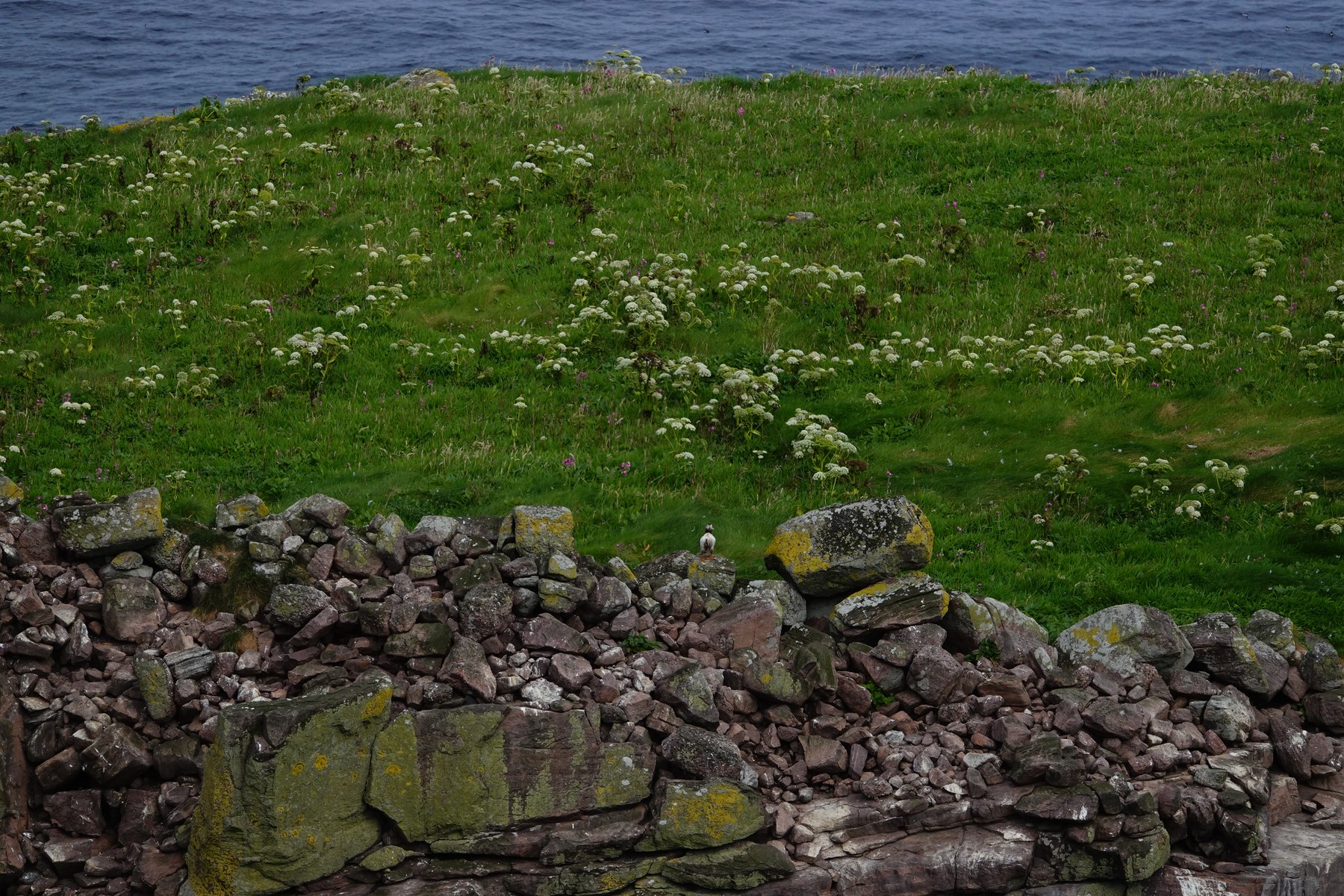
The original photograph from Handa: one small, distant puffin standing among the rocks.
The photograph is not technically perfect. The bird was distant, the moment was brief and the image is soft. I am including it because it is the honest version of the experience. Sometimes wildlife trips give you exactly the encounter you imagined; sometimes they give you one small orange beak among the rocks.
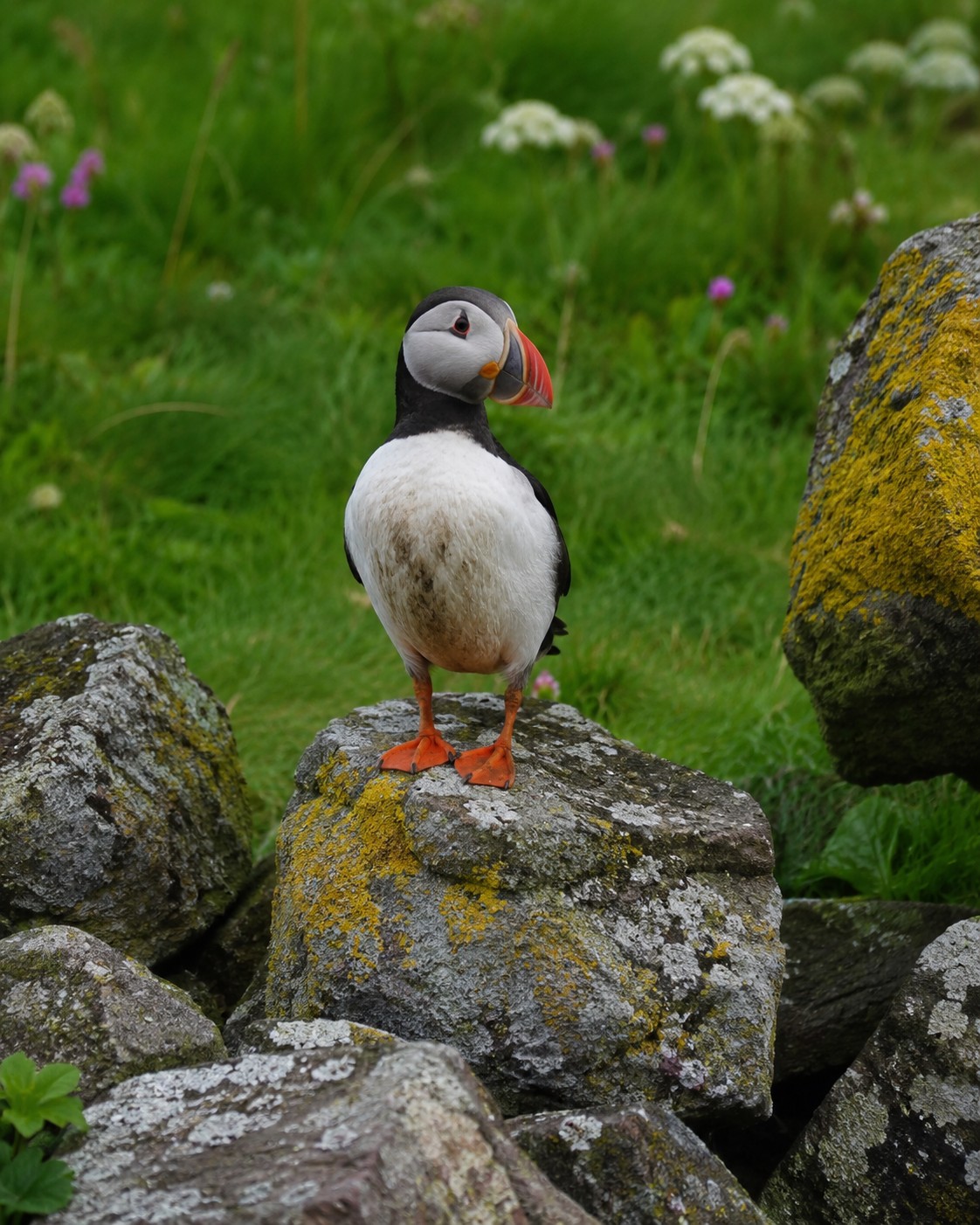
An AI-generated close-up based on the original scene, included to show the puffin more clearly. This is not the original photograph.
If puffins are your main reason for visiting, I would aim earlier in the season. If I did the trip again, I would choose May. The local ferry operator currently recommends May, June and July, while the Scottish Wildlife Trust visitor information says puffins are best seen around the Great Stack from May to July. Even within that window, wildlife never works to a guaranteed timetable.
Crossing from Tarbet
Handa is reached from the tiny hamlet of Tarbet, north of Scourie on Scotland’s northwest coast. The crossing is short, but the little passenger boat makes the island feel properly separate from the mainland.
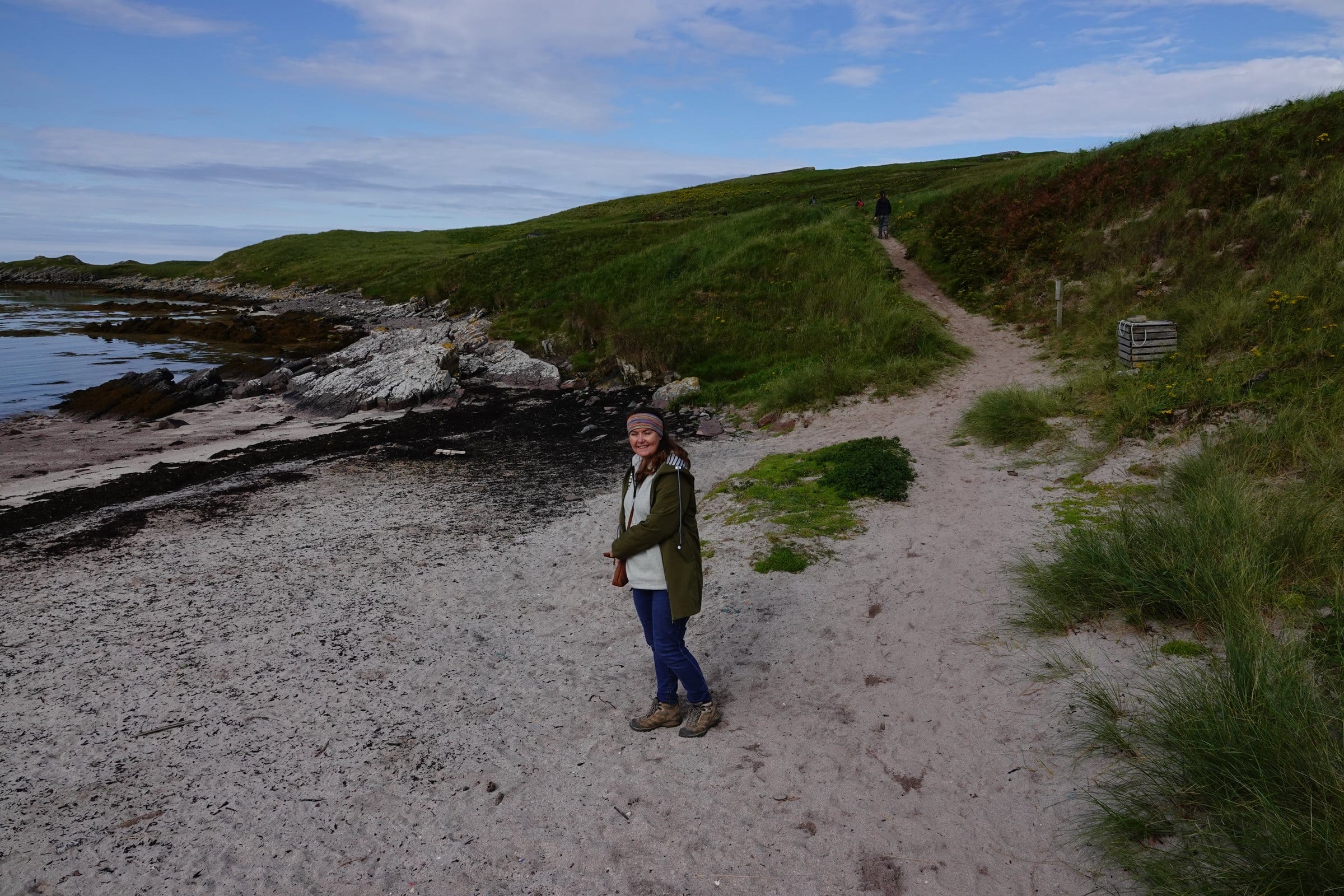
The landing immediately feels remote: beach, low green hills and a path leading into the reserve.
The boat lands on the beach rather than delivering you to a large visitor centre or developed harbour. That simple arrival sets the tone. Handa feels protected, low-key and exposed to the weather.
There are reserve staff and basic visitor facilities near the landing, but this is not a landscaped attraction. You are stepping onto a wildlife reserve where the trail, cliffs and animals are the day.
Walking into the reserve
From the beach, the route climbs gently into open moorland. Sections of boardwalk help protect the ground and guide visitors across the island.
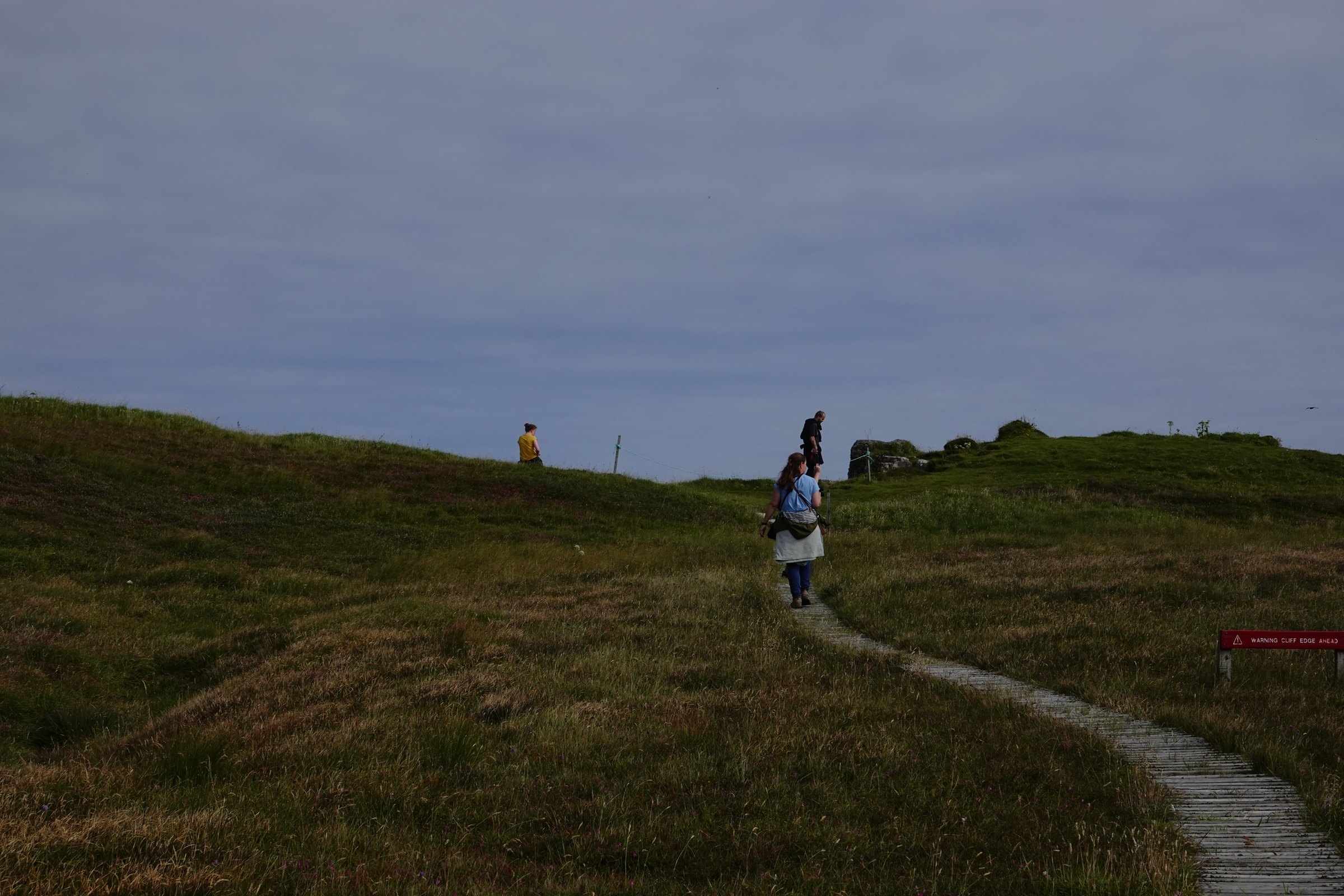
The boardwalk carries visitors across the moorland towards the western cliffs.
The walk gives the day a good rhythm. The landscape opens gradually rather than revealing everything at once. At first there are low hills, grasses, heather and scattered birds. Then the Atlantic edge arrives with almost no warning.
VisitScotland describes the main circular walk as roughly 6km, with a shorter out-and-back option of around 4km to the cliffs. Neither distance sounds difficult, but the exposed setting, uneven ground and changeable weather are worth taking seriously.
The cliffs are the real spectacle
Even without the puffin encounter I had imagined, the cliffs alone justified the journey.
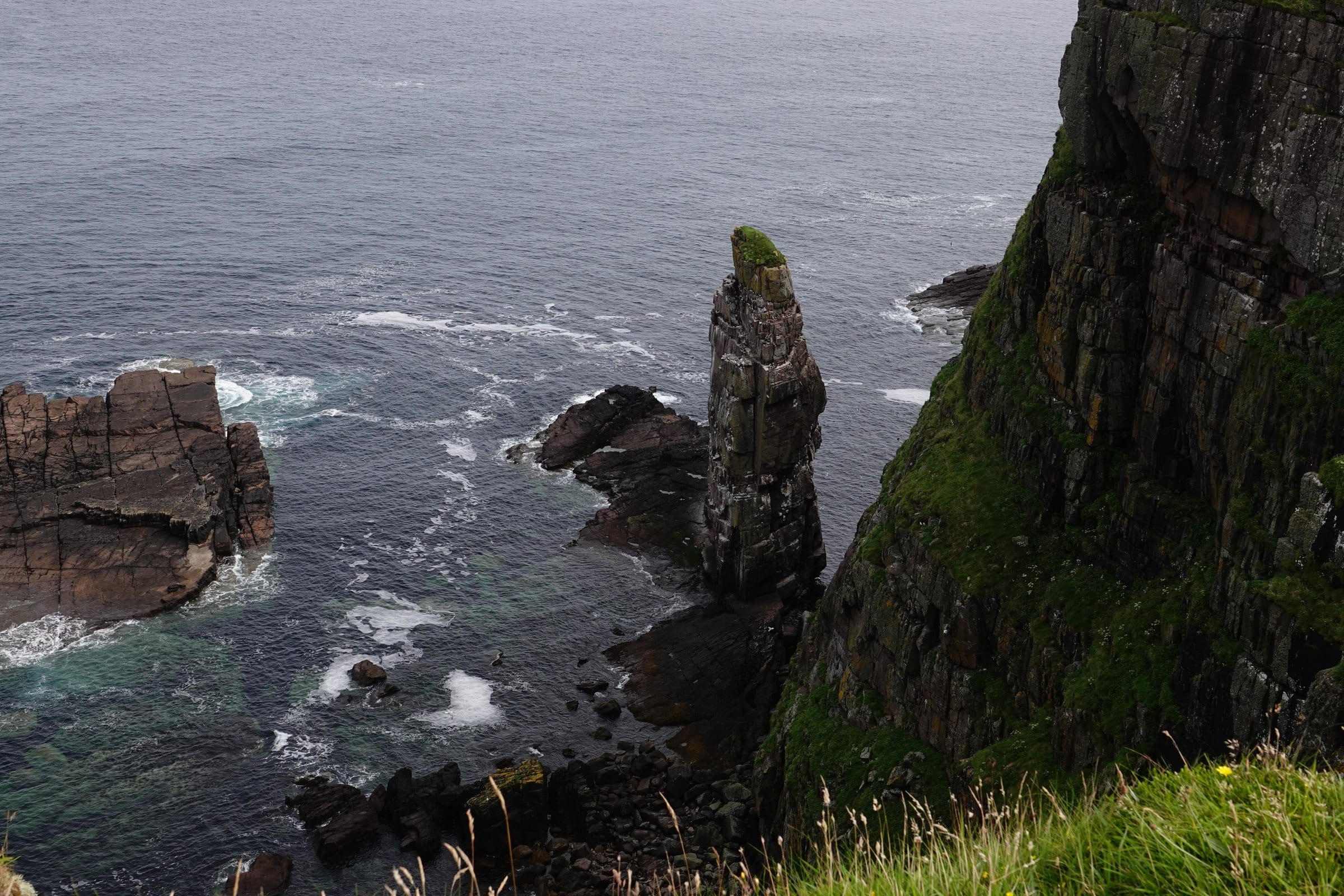
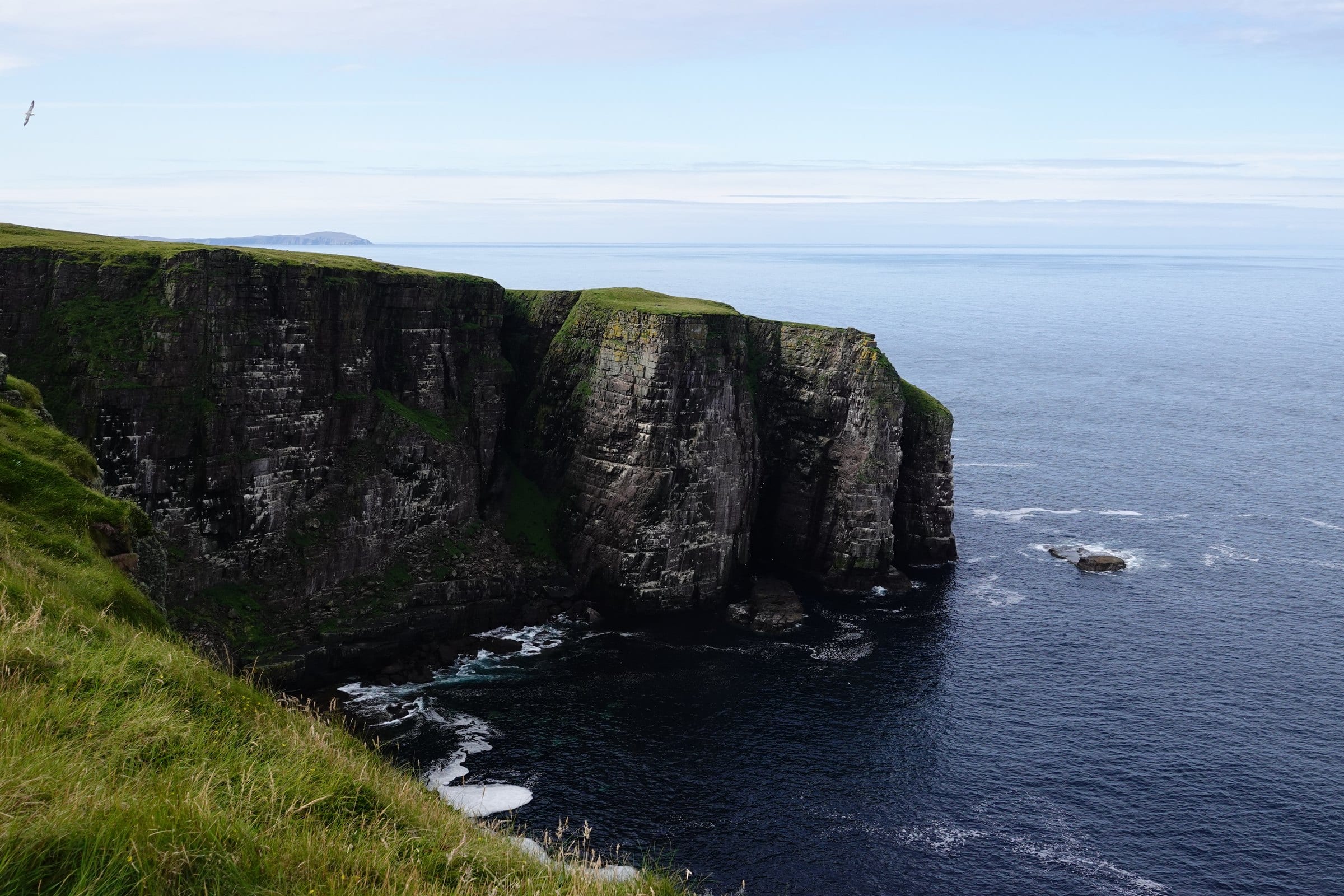
The sea stacks and vertical rock faces make the island feel much larger and wilder than it first appears from the landing beach.
Handa’s cliffs are formed from ancient Torridonian sandstone. The horizontal layers create ledges where seabirds can nest, while the darker faces and green cliff tops produce a dramatic contrast against the sea.
The scale is difficult to capture in a single photograph. From above, the birds can look like small white marks. Then you start noticing how many ledges are occupied and how much movement is happening across the entire cliff.
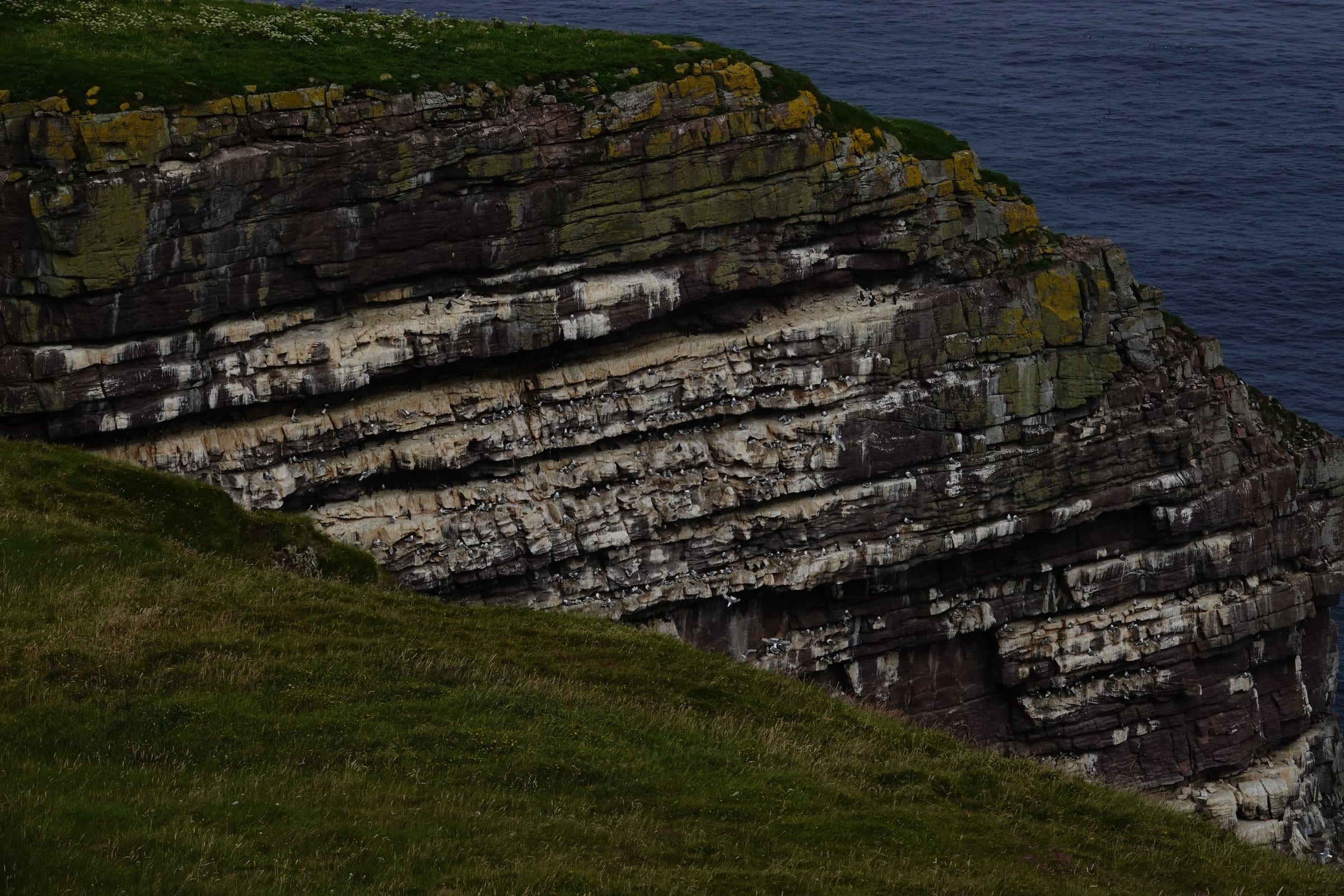
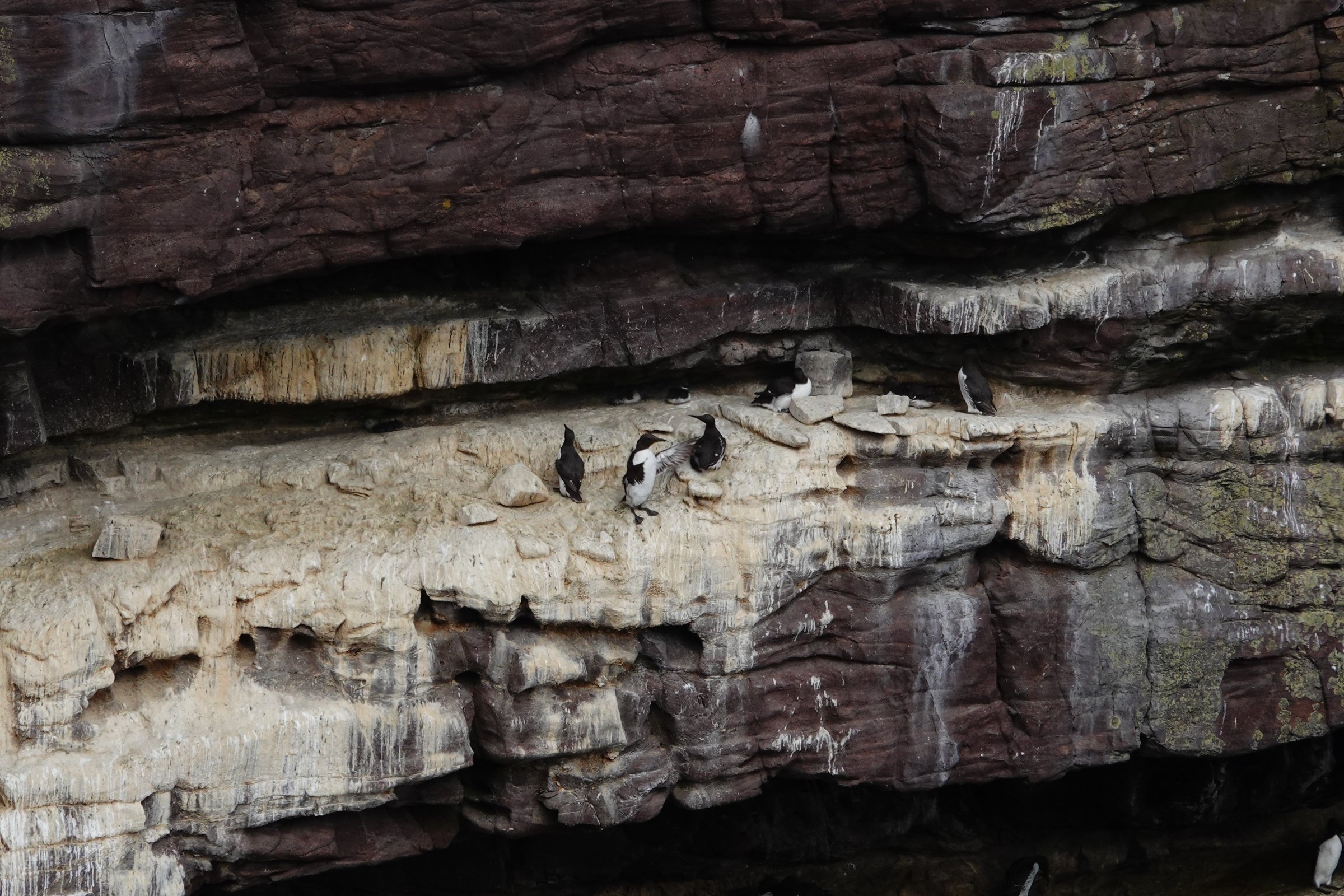
The noise completes the experience. Photographs can show the numbers and geology, but they cannot properly reproduce the feeling of standing above a working seabird city.
A bird island beyond the cliff colonies
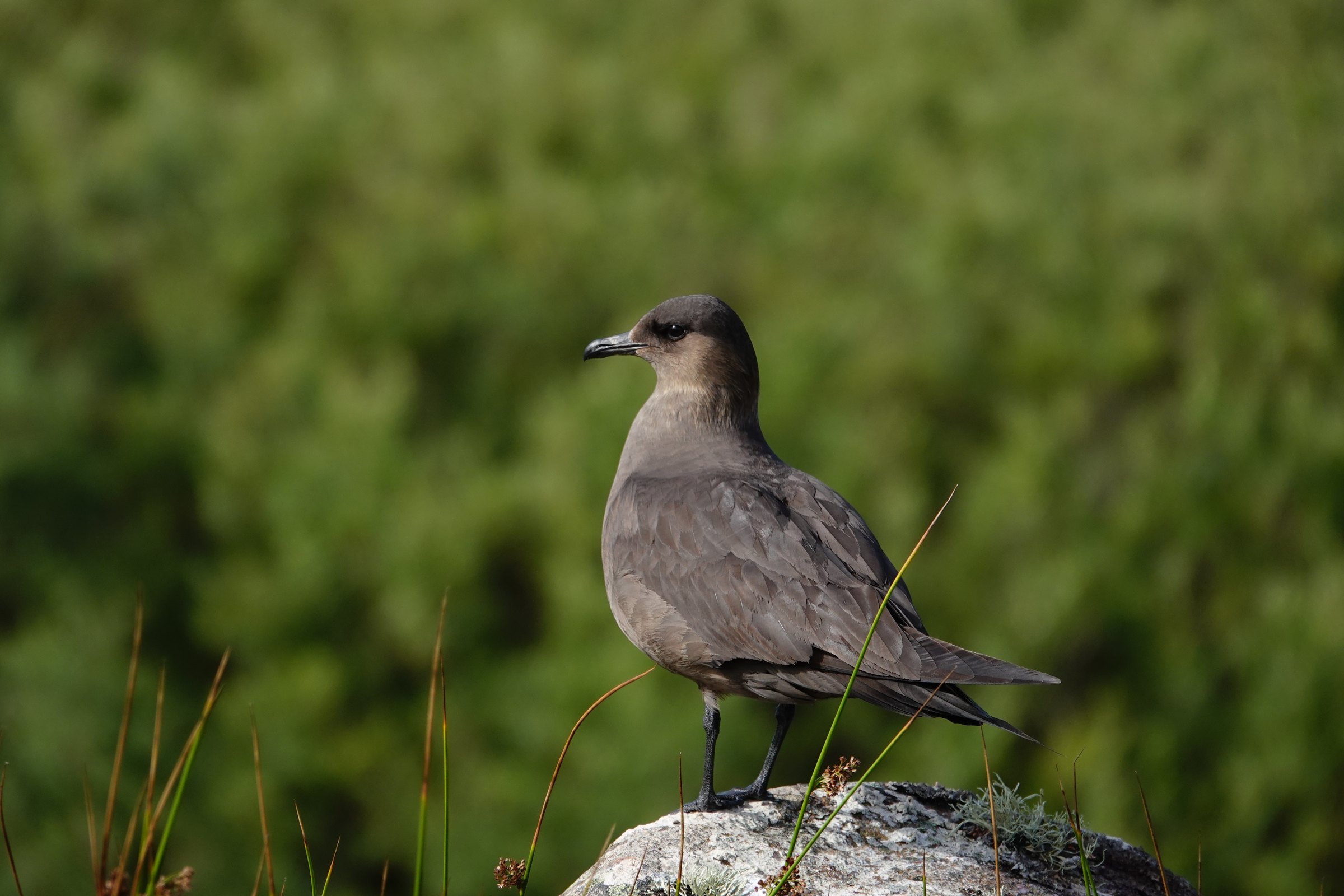
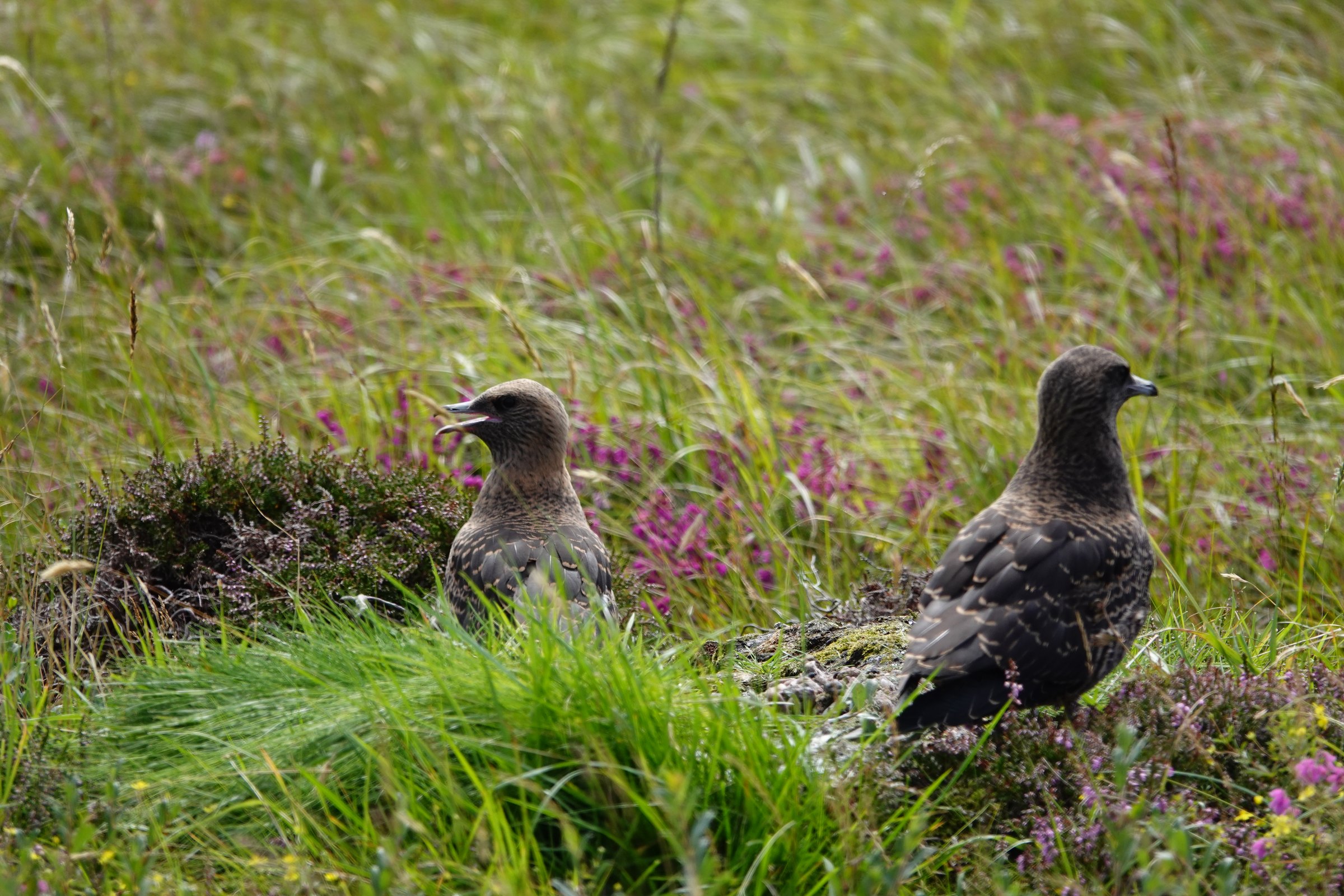
The cliffs are the headline, but the island’s wildlife continues across the moorland. Skuas were some of the most memorable birds because they felt so present in the landscape.
There were quieter encounters too: a small bird among the flowers and a red grouse almost disappearing into the long grass.
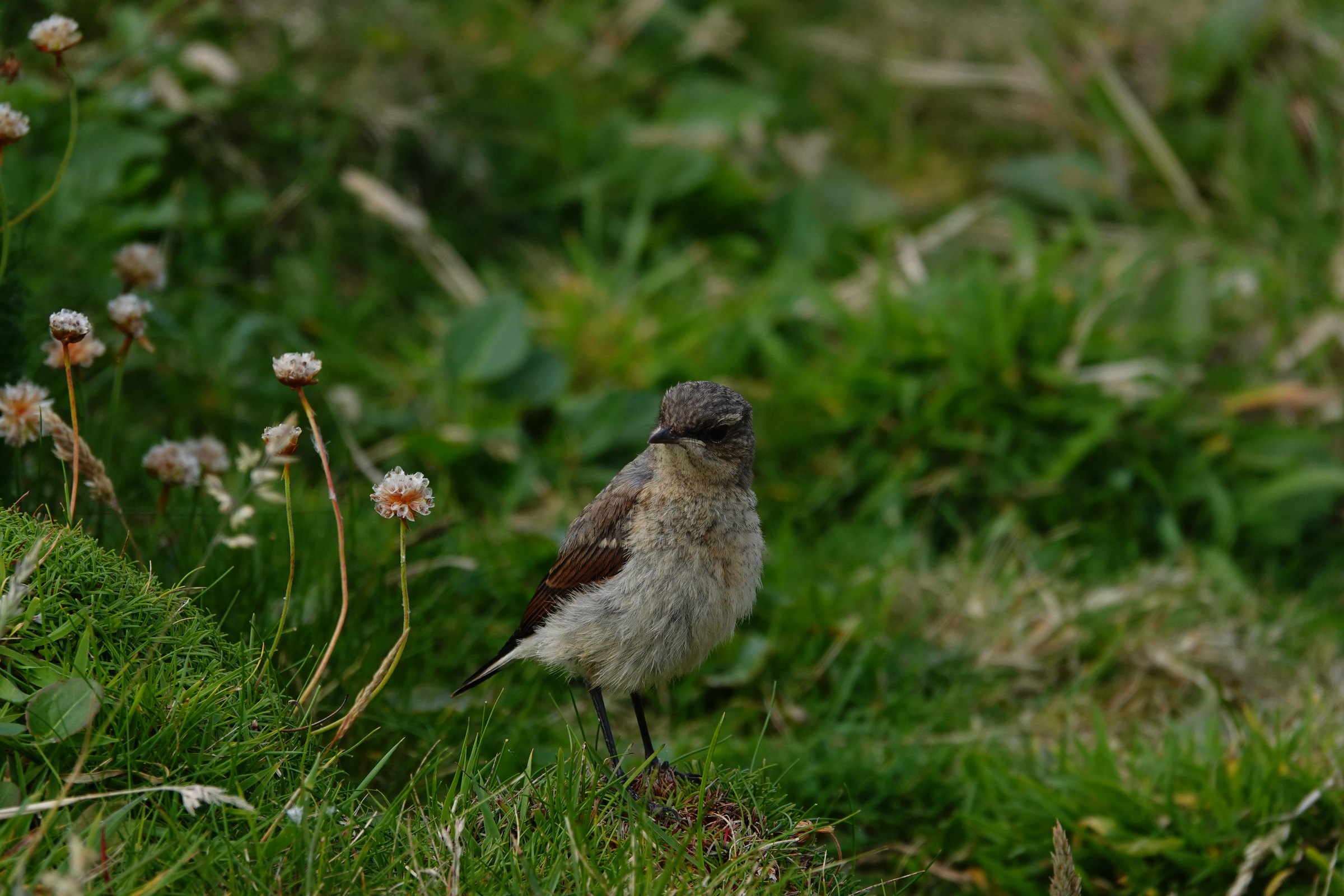
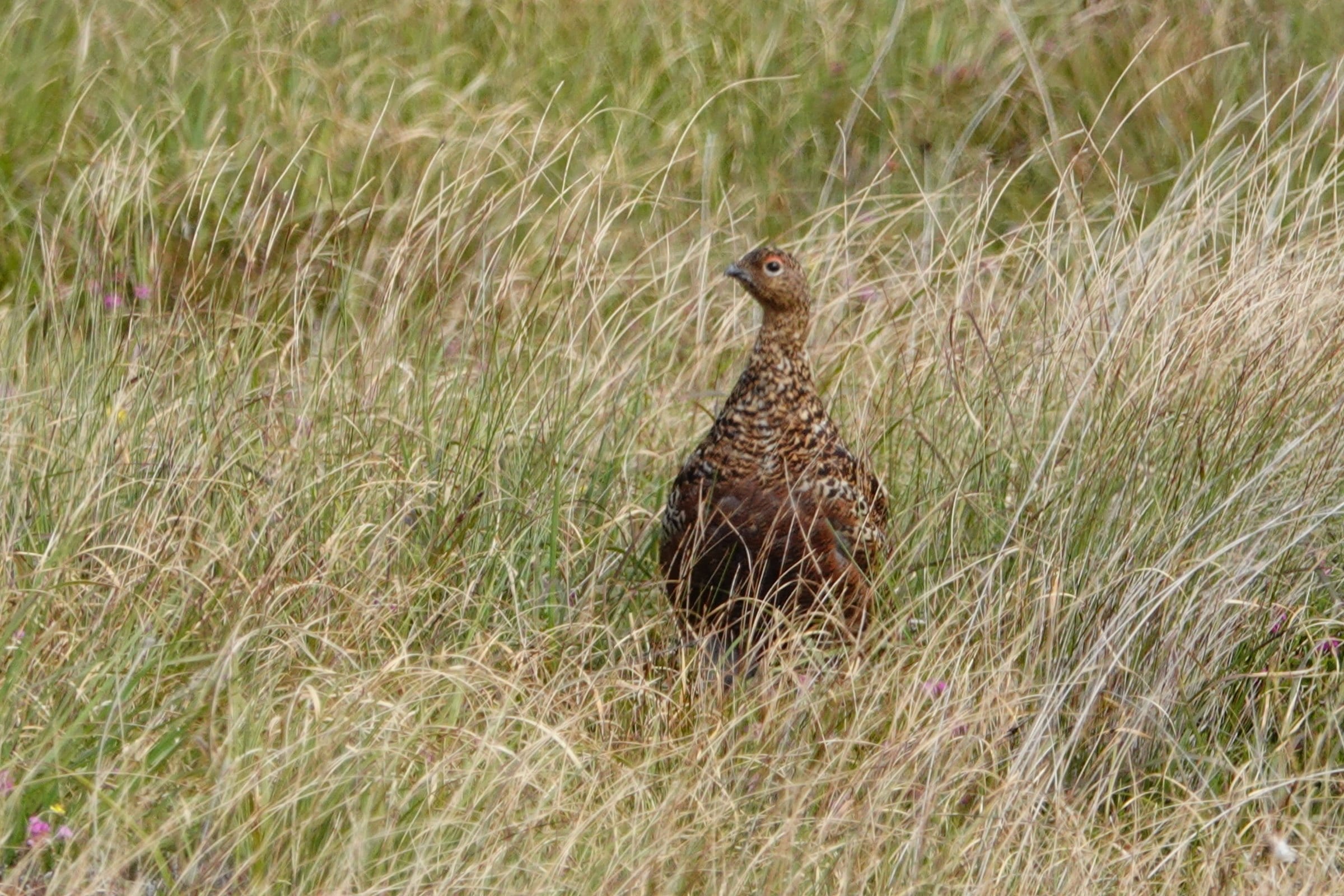
This variety is what made the experience of being on a “bird island” so special. It was not one viewing platform or one famous species. The entire walk kept changing the scale of the wildlife, from a bird almost at our feet to thousands covering a distant cliff.
What late July felt like
Late July gave us a version of Handa between seasons. The island was still full of life, but the puffin chapter was ending. For the full bird-island experience with a better chance of puffins, May would be my choice next time.
There was something poignant about that. We had made the journey for a particular bird and arrived when its summer story was nearly over. Yet the island refused to feel empty. Guillemots filled the ledges, skuas watched from the moorland, and the cliffs remained immense.
I would still return at a better time for puffins. But I would not describe this visit as a failed puffin trip. It became a much broader wildlife experience than I had expected.
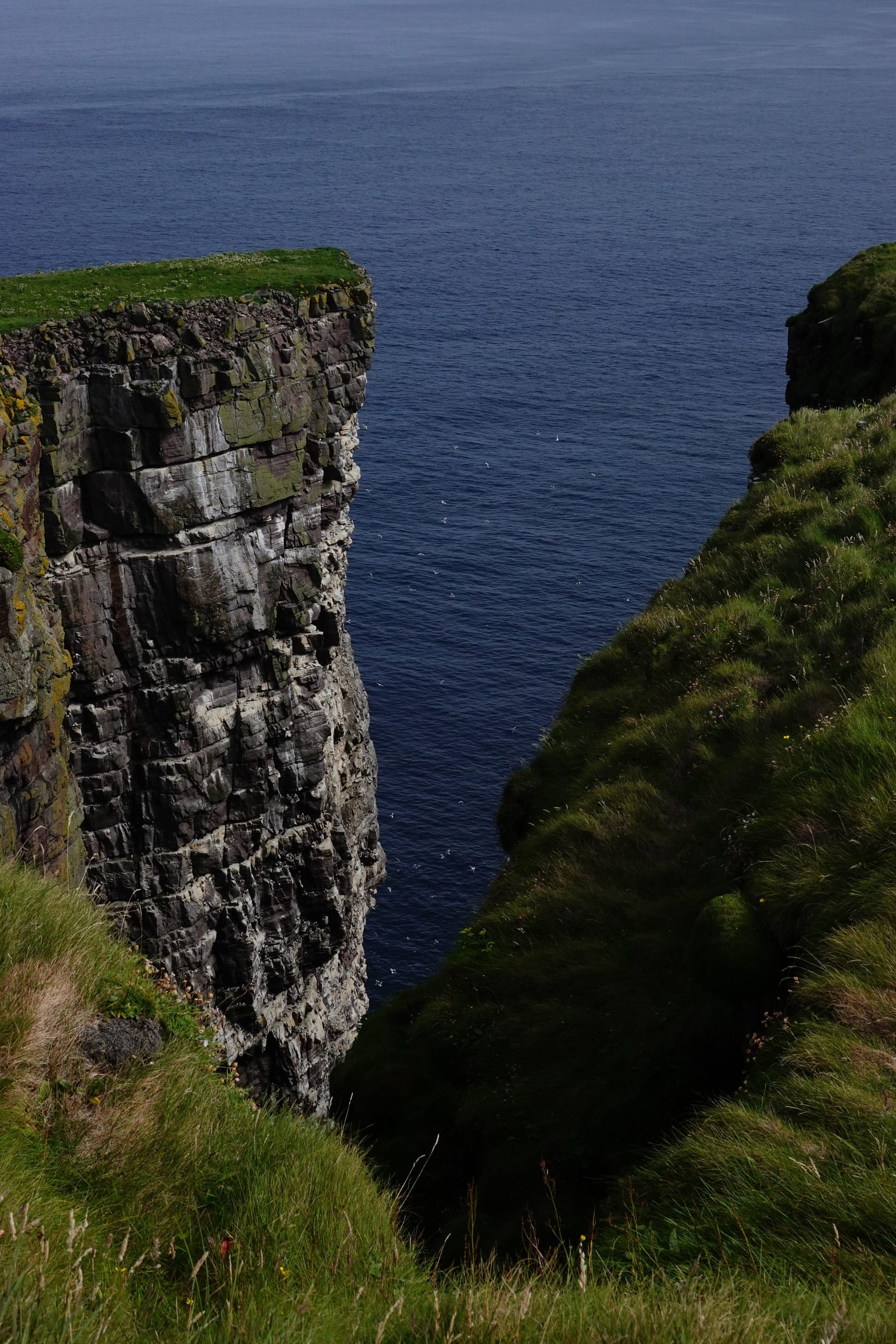
A final look into the cliffs, with seabirds moving above the dark water.
Practical planning notes
The details below were checked against the official ferry information in July 2026. Conditions and operating days can change, so confirm them again immediately before travelling.
| Detail | Current planning information |
|---|---|
| Departure point | Tarbet, approximately three miles north of Scourie off the A894 |
| Operating days | Monday to Saturday; no regular Sunday service |
| Outbound times | From 9am, with the latest outward ferry currently at 1:30pm |
| Last return | Currently 5pm |
| Booking | Turn up rather than pre-booking a fixed time |
| Weather | All crossings are weather-dependent |
| Current fare | £25 adults, £10 children under 14, free for children under five |
| Payment | Cash only according to the ferry operator |
| Dogs | Not carried on the small passenger ferry |
| Walking route | Approximately 6km circular, with a shorter 4km cliff option |
| My timing choice | May, if seeing puffins is the main reason for the visit |
I would also take:
- Waterproof and windproof layers even if the mainland weather looks settled.
- Proper walking shoes for wet, uneven and exposed ground.
- Water and food for the day.
- Binoculars, especially if puffins or offshore wildlife are important to you.
- Cash for the ferry.
- Enough time to walk slowly and stop at the cliffs rather than racing around the circuit.
Source and verification note
This account is based on our own late-July visit to Handa Island and the photographs taken on 29 July 2025.
Current ferry times, fares and restrictions were checked against the Handa Ferry website. Reserve, wildlife and route context was checked against the Scottish Wildlife Trust visitor leaflet and VisitScotland’s Handa Island listing.
Ferries remain weather-dependent, temporary cancellations occur, and wildlife sightings are never guaranteed. Check the ferry operator’s latest update before setting out.